96% RTP Means What House Edge Exactly? Understanding Casino Odds and Their Real-World Implications
Ever seen a casino game boasting a 96% RTP and wondered, “What does this really mean in terms of house edge?” If you’ve also encountered brokerage apps selling weekly options with flashy returns, but hidden fees like theta decay, assignment risk, and spreads, it’s easy to get confused. Today, we’ll demystify the math behind these numbers and why expected value (EV) is the real dividing line between winning and losing — not just “risk.”
What Is RTP and How Does It Translate to House Edge?
Let's start simple. RTP stands for Return to Player. A game with 96% RTP pays back 96 cents on average for every dollar wagered, in the long run. The house edge is the flip side of RTP:
- House edge = 100% - RTP%
- So, 96% RTP means a 4% house edge
This 4% means the casino expects to keep 4 cents for every dollar bet over the long haul, not counting variance or short-term luck.
Casino Odds Explained: The Sign in Front of the Number Matters
Your key takeaway here is always to pay attention to the sign in front of the number. A 4% house edge means the casino has an advantage of +4%. As a player, your expected value is -4%. This is not “risk,” it’s negative expected value. Mixing these terms or hiding the sign turns education into vibes—and that’s where folks lose money fast.
Expected Value: The Real Dividing Line
“Risk” is useless unless you specify the sign (+ or -) of expected value. Expected value tells you the mathematical expectation of your outcome over the long run:
Term Meaning In Context Expected Value (EV) Average outcome per bet if repeated infinitely +2% EV means profit over time; -4% EV means loss over time House Edge Casino’s profit margin per bet 4% edge on 96% RTP game → casino expects 4% gain Variance Measure of short-term swings Big wins or losses that deviate from EV in the short termHere’s the deal: positive EV = you’re on the right side of the long-term math. Negative EV = you’re swimming against the tide.
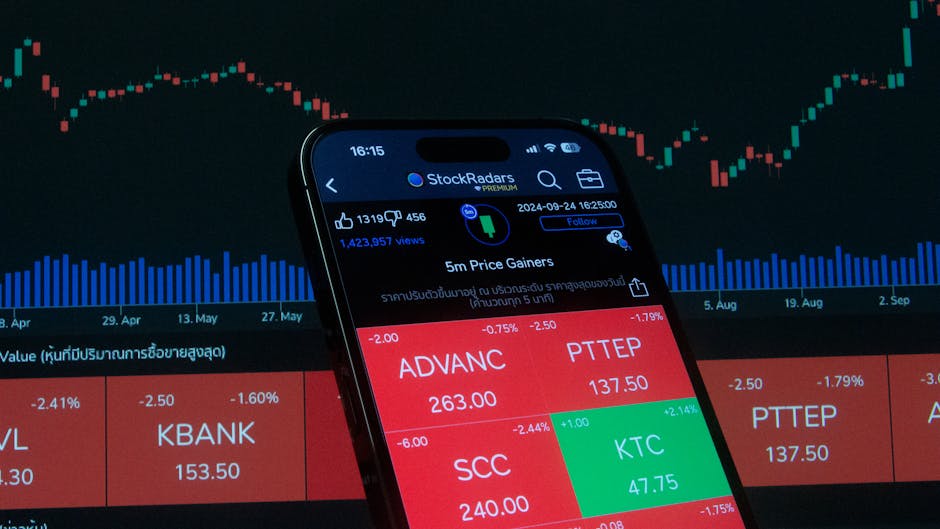
Positive EV in Broad Equity Ownership vs Negative EV in Casino Games
Compare this to owning broad stock market equity, like an S&P 500 index fund. Historically, equity ownership has had a positive expected return around 7-10% annually after costs, dividends, and and inflation considerations.
That’s the magic of broad equity:
- Transparent fees and costs, often below 0.1% for index funds
- Positive long-run EV, due to economic growth and earnings reinvestment
- Law of large numbers applies, smoothing outcomes over time for patient investors
Contrast that with a casino game:
- Negative expected value (-4% in our 96% RTP example), meaning loss is mathematically expected
- Costs and odds are usually transparent, though sometimes hidden “vig” or rake applies
- Short-term variance can be huge, but long-term loss is certain
Why Retail Investors Should Care
Many retail investors jump into app-based trading buying weekly options, tempted by fast potential gains. But like casinos, these markets include hidden costs and mechanics that chip away at expected value, often leaving them with negative expected returns.
Options Mechanics: Theta Decay, Assignment Risk, Spread, and Commission
Weekly options might sound sexy, but consider these typical embedded costs:
- Theta Decay: Options lose value as expiration approaches because the time value diminishes. This is a natural erosion that benefits sellers and eats buyers’ capital.
- Assignment Risk: Early exercise or assignment can force unexpected stock purchases or sales, potentially at unfavorable prices, adding risk costs.
- Bid-Ask Spread: The difference between the buy (ask) and sell (bid) price is effectively a hidden cost you pay whenever you trade.
- Commission & Fees: While some platforms advertise zero commissions, there can be regulatory fees or payment for order flow price impacts reducing returns.
Put all these together and your “expected value” for weekly options buying may be significantly negative, much like a 96% RTP slot machine. Only the difference is your brokerage app probably doesn’t show you the “house edge.”
Transparency: RTP Published vs Hidden Trading Costs
Casinos have one advantage: they publish RTP and house edge openly. You can look it up, verify it, and calculate your expected loss per bet.

In contrast, many retail trading apps:
- Hide the real costs: spreads, slippage, and theta decay are not summarized anywhere
- Gamify trading: confetti and rewards distract from actual costs
- Use hand-wavy arguments: “you can stop early” without explaining expected value over time
The irony? Transparency is better in a casino than in some modern retail investment products.
Time Horizon and The Law of Large Numbers
Why does expected value matter only in the long run? Because of the law of large numbers, which states that outcomes average out over many repeated trials.
- In a 96% RTP game: short-term players can win big or lose big due to variance.
- But over thousands of bets: the player's outcomes will approach -4% EV exactly.
- Similarly, in options trading: your account will tend to decline by the embedded cost percentages when averaged over many trades and cycles.
For casual gamblers or investors using small samples, luck may disguise https://thinkaora.com/luck-is-not-a-plan-where-investing-and-games-of-chance-actually-differ/ losses or gains. However, fooling oneself into thinking a negative EV system is sustainable is financial tunnel vision.
Summary and Practical Advice
Let’s wrap up the core lessons:
- 96% RTP means a 4% house edge for the casino. You can expect to lose 4 cents per dollar wagered in the long run.
- Expected value (EV), not “risk,” is the real metric of financial sustainability. Positive EV = long run profit; negative EV = long run loss.
- Broad equity ownership delivers positive EV with transparent costs. Casino games and some trading products hide negative EV and costs under the hood.
- Options trading involves many hidden costs like theta decay, spreads, and fees, making “fast returns” a mirage for most.
- Transparency matters: casinos publish RTP and house edge; brokerage apps should publish effective trading costs and expected value impacts.
- Law of large numbers means expected losses will materialize over time. Short-term luck is noise; long-term EV is signal.
Next time you see “96% RTP,” think “4% house edge” and remember it’s a guaranteed negative EV bet for you, no matter how tempting. When investing, demand clear costs and expected values. Your wallet will thank you.
Originally written by a former casino math trainer turned retail-investing educator, dedicated to clarity and calling out misinformation disguised as “vibes.”